Travel Car Seats: A Guide for Family Holidays
If you're driving on holiday, or hiring a car at your destination, your child's car seat is one of the most important things to get right. Do you take your own seat, buy a lighter travel seat or rely on the hire company? This guide explains the rules, the features that matter and the common mistakes families make.
The law in the UK
In the UK, children must normally use a child car seat until they're 12 years old or 135 cm tall, whichever comes first. The seat must be suitable for the child's weight or height and must be fitted correctly. A rear-facing baby seat must never be used in a seat with an active front airbag. The full rules, including the limited exceptions, are on GOV.UK.
Abroad, the local law applies. Rules differ between countries on age, height, front-seat travel and the type of seat allowed, so check before you go. The GOV.UK foreign travel advice pages and the motoring organisations are good starting points.
R129 (i-Size) and older seats
New child car seats are approved under the R129 regulation, often called i-Size. You'll find the approval label on the seat itself. R129 seats are chosen by your child's height rather than weight, include side-impact testing and require children to stay rear-facing until at least 15 months old. Many experts recommend rear-facing for longer where the seat allows.
You may still come across seats approved under the older R44 regulation, chosen by weight. Whichever you use, it must carry an approval label and suit your child's current size.
Travel car seat on Amazon
Look for R129 (i-Size) approval and check it fits the hire car or taxi you will use.
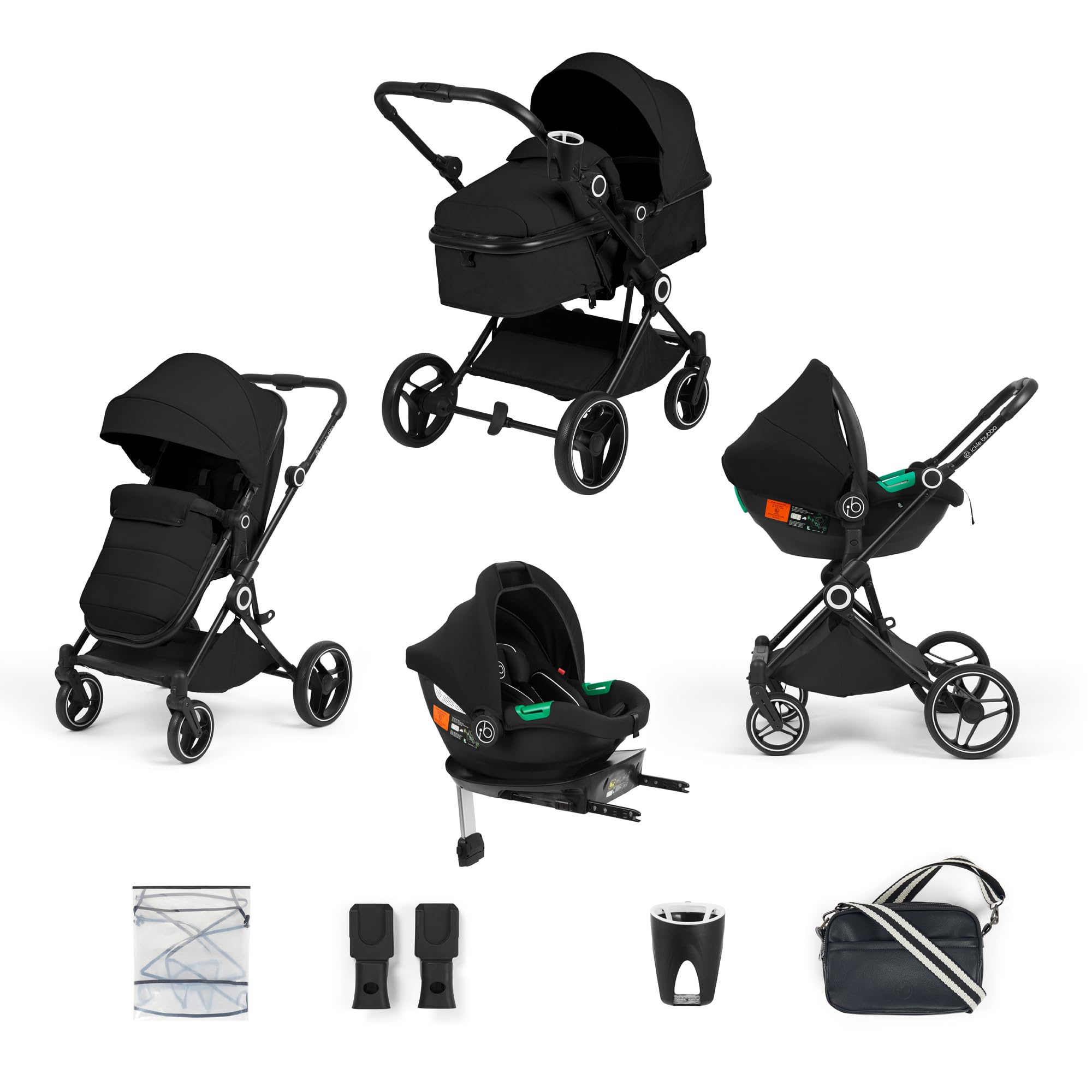


ISOFIX: check before you rely on it
ISOFIX connectors clip the seat directly to anchor points in the car, which reduces fitting errors. Many i-Size seats are designed to be fitted with ISOFIX. The catch on holiday is that you won't always know what car you'll get.
- Hire companies usually guarantee a car category, not a model, so ISOFIX points may or may not be present in the seat you want to use.
- Taxis and transfer vehicles may have no ISOFIX at all.
- If you're taking your own seat, a model that can also be fitted with the adult seat belt gives you a fallback.
Should you use a hire-car seat?
Hiring a seat with the car saves carrying one, but quality varies widely. You may not know the seat's history, and it may be dirty, damaged, missing parts or unsuitable for your child's size. Staff are often not allowed to fit it for you.
If you do hire one:
- book it in advance and specify your child's age, height and weight;
- inspect it on collection: approval label, harness, buckle, shell and instructions;
- refuse anything cracked, frayed or the wrong size, and ask for another;
- allow time to fit it yourself before you drive off.
Our guide to holiday car seats covers the take-or-hire decision in more detail.
Booster seats for older children
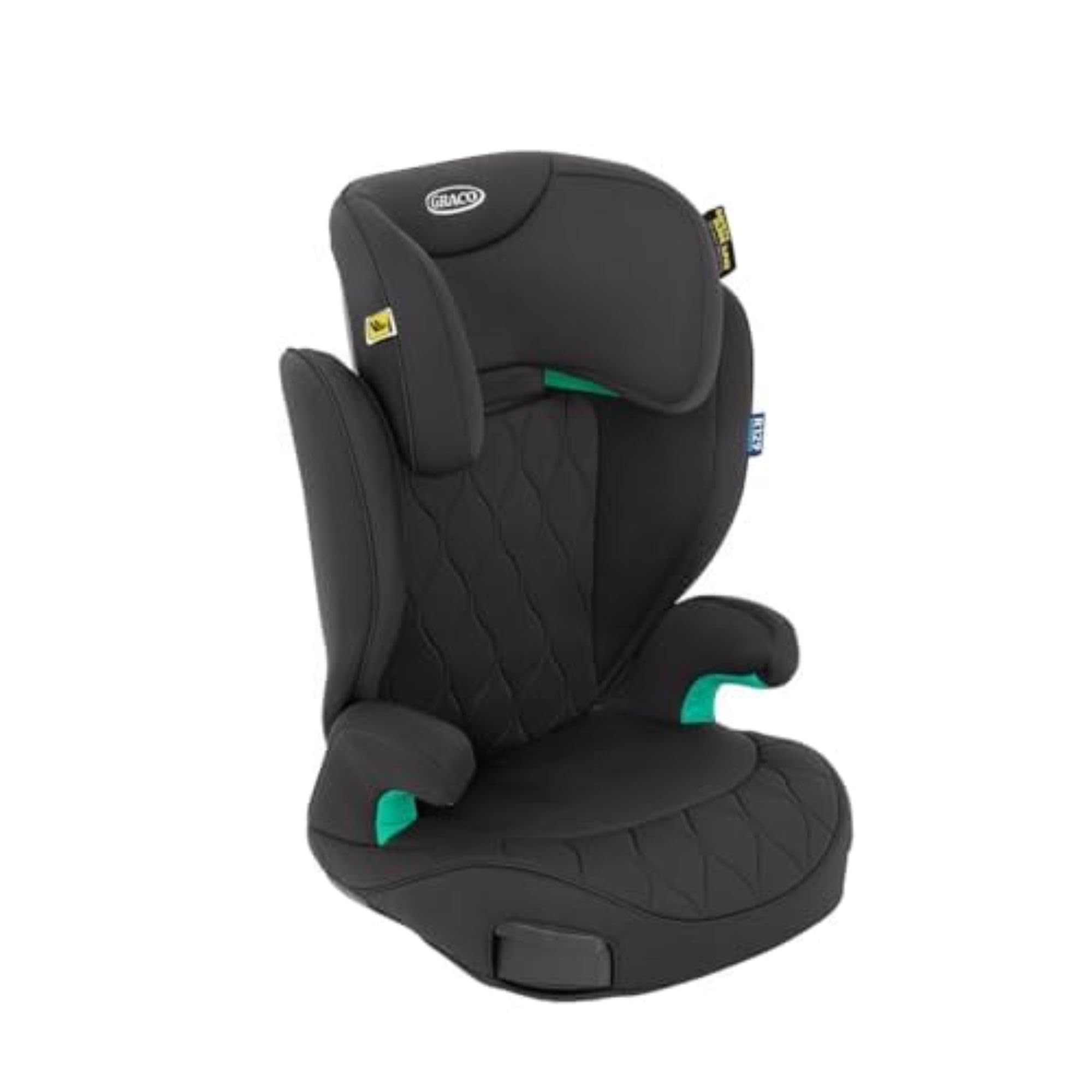
Once children outgrow a harnessed seat, a high-back booster positions the adult seat belt correctly across the shoulder and hips. High-back boosters also give side and head protection. Backless booster cushions are lighter and easy to pack, but rules introduced in 2017 mean newly approved booster cushions are only for children taller than 125 cm and heavier than 22 kg. A high-back booster remains the safer choice where you have the space.
Portable booster seat on Amazon
A high-back booster is safer than a cushion; some fold small enough for a suitcase.


Flying with a car seat
Many airlines carry a car seat free of charge, either in the hold or at the gate, but policies vary, so check with your airline. Some families take the seat on board for a baby or toddler who has their own paid seat. Only some car seats are approved for aircraft use, and the airline decides what it will accept. Look for an aircraft approval marking on the seat's label and confirm with your airline before you fly. Booster seats are generally not used on aircraft.
If the seat travels in the hold, a padded car seat bag protects it from knocks and keeps straps and fabric clean. Some bags have wheels or backpack straps, which helps when you're also managing children and luggage.
Car seat travel bag on Amazon
A padded bag protects a checked car seat and keeps it clean in the hold.


Common mistakes to avoid
- Moving up a stage too soon. Keep children in each stage until they reach its maximum height or weight.
- Loose harnesses. Remove bulky coats and check you can't pinch any slack in the straps at the shoulder.
- Twisted or misrouted belts. Follow the seat's belt guides exactly; they differ between seats.
- Buying second-hand. You can't be sure a used seat hasn't been in an accident. Only accept one from someone you know and trust.
- Assuming the rules are the same abroad. Check the local law at your destination.
Getting it right
A suitable, approved seat that's fitted correctly matters far more than any extra feature. Check the law at home and abroad, decide early whether to take or hire, confirm ISOFIX and airline rules, and practise fitting your seat before the trip. If you're also taking a buggy, see our guide to travel buggies.